Africa is the second largest continent on Earth and is widely recognized by scientists as the first place where humans lived. Therefore, it is no surprise that the history, culture, and religion of Africa continue to have an impact on people in all parts of the world even today.
Before European countries began exploring and colonizing many parts of Africa, thousands of native tribes and ethnic groups existed throughout the continent. Each of these had their own physical traits, customs, religions, and languages although some were shared amongst neighboring groups. Although the push for colonial rule destroyed some of the ethnic groups that once existed, many have managed to survive and even thrive. The slave trade that sent so many Africans to the New World against their will actually served to spread African culture around the world.
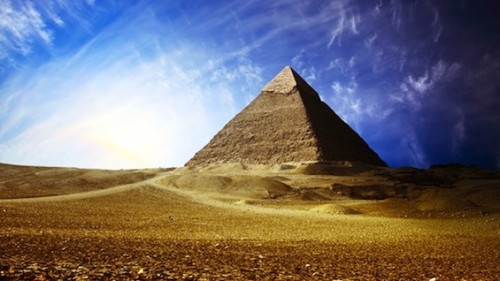
Art has always been a notable part of African culture. Architecturally, some of the most internationally known ancient works of art are found in Africa. For example, experts are still baffled by the achievements of the ancient Egyptians in the field of architecture, specifically when it comes to the Great Pyramid of Giza. African music has had a clear impact on the development of other musical genres around the world as well. The slave trade spread African rhythms to the New World where genres such as samba, salsa, jazz, reggae, and hip hop have been developed using notable elements of ancient African percussion and instrumentation. It is clear that African history, African culture, and African music have had an international impact are part of noteworthy world heritage.
Showing posts with label World Heritage. Show all posts
February 24, 2014
November 23, 2013
History And Economy In Japan
Japan is one of the world’s most influential nations despite its relatively small geographical size. It boasts one of the largest economies and is home to Tokyo, the largest metropolitan city on Earth. Throughout history, the Japanese people have shown an affinity for making progress socially and culturally.
Japan’s culture changed dramatically at the historical point in 1854 when the country was finally made open to the West after centuries of being almost entirely closed off to the rest of the world. The Empire of Japan quickly became an industrialized nation that earned notable status as a world power. Because it was closed off from the rest of the world for so long, Japanese culture was allowed to develop extensions and still affects the lifestyle of many modern Japanese families despite the fact that Western culture has crept in. Some notable aspects of Japanese art include painting, sculpture, and architecture. Wooden pagodas with sliding doors are found throughout Japan. Paintings have been found dating all the way back to 300 BC.
The Japanese economy is one of the most advanced in the world and relies heavily on the technology and service sectors. The industrial capacity of Japan is enormous; motor vehicles, ships, electronics, and even processed foods for export to the entire world are produced in Japan. The government as well as national businesses invest heavily in scientific research in order to continue being a leader in international technology. Throughout its vast history and in modern times through technological developments, Japan has stood out as a major contributor to world heritage.
October 2, 2013
The Religious History Of India
India is the second most populated country in the world and has been an important part of the international economy for centuries. It is the birthplace of several important world religions including Hinduism, Buddhism, and Jainism which makes it a major part of world heritage.
The origins of Hindu philosophy and mythology were established from 1700 to 500 BC in what is called the Vedic period. There are still many practices and beliefs that are treasured today which came from this time period including karma, yoga, Dharma, and moksa. Hinduism has gone through many notable changes throughout the years but has been the major religion in India for centuries. Hindu temples also contribute to world heritage because their stunning architecture, design, and preservation of religious history helps researchers better understand the customs of ancient peoples who worshipped in them. It is estimated that more than 80% of the population belongs to the Hindu faith, making it the home of the largest Hindu population on Earth.
Although less than 1% of Indians claim to be Buddhist, this religion originated in India and still has major impacts on local culture. Buddhist teachings spread from the area of Bihar, India throughout Asia from ancient times. In the 13th century, it declined drastically as a religion in India but many of its core concepts had a permanent influence on the Hindu religion. It is still practiced in the Himalayan religions of India and has recently been adopted by many of the intellectual elite of the country. The birth of two world religions, apart from many other contributions, makes India an important part of world heritage.
September 17, 2013
Ancient History and Modern China
China, or the People’s Republic of China, is the second largest country in terms of land on Earth and is the second largest economy. The country has a rich political and social history of dynasties and empires that, although long past, continue to influence the modern culture of China.
Although some evidence has been found of pre-historic people in China, the first historical rule of a dynasty in the area is that of the Xia Dynasty. This dynasty was once contested by historians as being mythical, but some evidence has been found giving its authenticity. Many wars were fought between rival states during the years of the feudal dynasties and eventually a unified Chinese empire was born in 221 BC. One of the most culturally important eras of Chinese rule was that of the Han Dynasty; its culture has endured into modern times. The era of the Han Dynasty saw China as the world’s largest economy thanks to military expansion and trade of materials such as silk.
The teachings of Confucius, a Chinese philosopher who lived from 551 to 479 BC, are still important to Chinese culture. His theories of ethics, society, and politics were solidified during the Han Dynasty. The basic elements of Confucianism are that secular things are regarded as sacred; it can be compared to modern humanism. It focuses on the importance of altruism, family, acts of goodness, and proper behavior in a community. Although the theories of Confucianism changed slightly with ingoing and outgoing Chinese empires, the core concepts have always remained and are still cherished by some of China’s great thinkers. Certainly, these teachings should be viewed as an important world heritage.
August 26, 2013
Linguistic And Natural Diversity In Brazil
Brazil is the largest country in South America and the home to the largest Portuguese speaking population in the world. The Amazon Rain Forest and Amazon River represent some of the most amazing and important natural contributions to world heritage to be found on Earth.
The Portuguese language is a very important part of culture in Brazil since it sets the country apart from its many Spanish speaking neighbors throughout the rest of South America and Latin America. There are also 180 recognized indigenous languages spoken throughout the country. There is also a strong deaf community in Brazil that uses Brazilian Sign Language, or LIBRAS, to communicate. Brazil has some of the strongest laws for the protection of Deaf rights in the world including inclusion of deaf people through interpreters into all levels of government and social infrastructure, especially education.
There is incredible biodiversity in Brazil thanks to the Amazon Rain Forest’s habitat and natural surroundings. The Amazon is home to many endangered and rare species that cannot be found anywhere else on Earth. This applies to both plant and animal life. Contributions to world heritage from the Amazon region of Brazil include the development of many important medicines from natural plant sources that can solely be found in this rain forest. International groups, including the United Nations, have made a massive effort in recent years to prevent the destruction of plant and animal life as well as important habitats throughout the Amazon. In addition to being a part of world heritage, this region contributes extensively to the modern economy of Brazil because of its agricultural potential.
August 2, 2013
Unique Features Of Australia
Australia is a very unique island nation located between the southern Pacific Ocean and the eastern Indian Ocean. The Commonwealth of Australia owes its formation to the colonial influence of the United Kingdom and its unique culture to the native peoples of the island.
On a cultural level, Australia is indeed a unique country. Historians and scientists have found that the indigenous peoples of Australia were living on the island for about 40,000 years before the first European settlers ever established colonies there towards the end of the 18th century. There were an estimated 250 different language groups on the island at the time when Dutch explorers first arrived there in 1606. An English penal colony was established in the region of New South Wales until January of 1788. After that, the entire island was explored by settlers and eventually the Commonwealth of Australia was formed in 1901.
Multiculturalism is an important part of modern Australia and is promoted by the government. There is a considerable population of indigenous people still living on the island. They mostly represent the Aborigines and Torres Strait Islanders. Although much of the culture of modern Australia is rooted in Western influence, local traditions and art are still appreciated and many artists in the late 20th and early 21st centuries have been working to develop art forms influenced by the natural landscape and ancient customs of Australia through the Contemporary Indigenous Australian art movement. When it comes to sports, Australia contributes to world heritage by promoting and excelling at international sports such as rugby, cricket, and swimming.
July 31, 2013
Worldwide Influence From the United Kingdom
Despite being a small group of island states off the coast of Europe, the United Kingdom has been one of the greatest world powers for hundreds of years. Four sovereign states on and around the island of Great Britain comprise the modern United Kingdom which contributes greatly to world heritage.
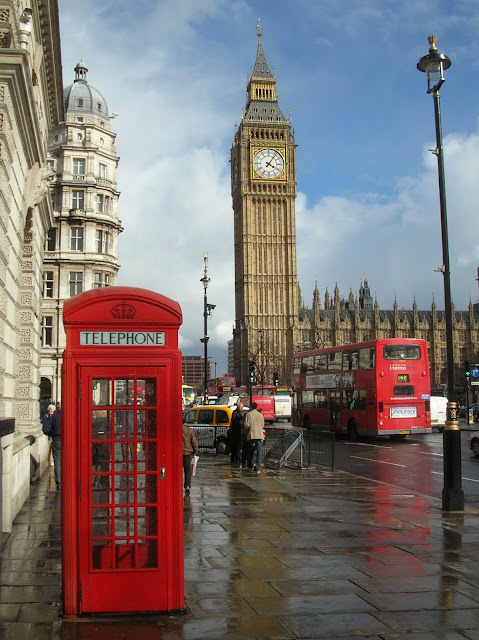
The United Kingdom has wielded incredible military and cultural power around the world since ancient times. In 1707, the Kingdom of Great Britain was established through the Acts of Union that brought together Scotland and England. The United Kingdom was formed in 1801 with the uniting of Ireland and Britain. During the 1800’s, the capital city of London was the largest city in the world and England wielded the greatest naval and imperial power on the globe. Beyond its extensive colonialism in India and Africa, the government of Great Britain also controlled the international economy because of its dominance in the area of world trade. Even today, many of the world’s leading nations, including the United States, can trace their roots back to England.
Colonialism made it possible for the United Kingdom to spread the cultures of England and Great Britain throughout the world. One of the major ways that the United Kingdom has contributed to world heritage is through the English language. It is now an international language used in the United States, Australia, Canada, South Africa, India, and other countries apart from the world’s greatest economic language. English literature has been important to the world since the 14th century, claiming many of the greatest written works in the world heritage of literature.
April 15, 2013
International Power In New York City
New York City is the most populated city in the United States and one of the most important cities in the world as regards finances, art, fashion, media, education, and technology. Some researchers claim that New York is the cultural capital of the modern world; it contributes to world heritage.
New York City can be traced back to a Dutch trading post established in the area in 1624. It later came under the control of the English and eventually became the capital of the United States for a brief period from 1785 to 1790. In 1898 the five boroughs of New York – Manhattan, Brooklyn, Queens, the Bronx, and Staten Island – were fused into one collective city. Manhattan continues to be the center of most activity in the city, especially as regards finances, fashion, art, education, and tourism. In recent years, however, Brooklyn has become popular amongst young artists and creative entrepreneurs and is growing at a high rate.
New York City is incredibly important on an international level. It is the most linguistically diverse cities in the world because an estimated 800 languages are spoken within its limits. Global leaders are regularly invited to important meetings in New York, especially as related to the United Nations. The international headquarters of this organization dedicated to worldwide peace and human rights has been located in Manhattan since 1952. Although the building and grounds are subject to many local laws, the land itself is regarded as under the jurisdiction of the United Nations and receives a number of extraterritorial privileges. When it comes to world heritage, few cities in the world rival the contributions made by New York City.
Labels:
brooklyn,
manhattan,
New York,
United Nations,
World Heritage
April 12, 2013
History And Culture In New England
The northeastern part of the United States, including Maine, Vermont, New Hampshire, Rhode Island, Massachusetts, and Connecticut, is commonly called New England. This region has a rich history and strong culture rooted in liberal ideals and an appreciation for education that dates back many centuries.
The first European settlement in New England was the Plymouth Colony in 1620; the second was in Boston in 1630 and called the Massachusetts Bay Colony. Since the earliest days of the United States, the religious, cultural, and educational values of those original settlers have pervaded in New England. Harvard University, which is still regarded as one of the finest institutions of higher learning in the world, was established in Cambridge, Massachusetts in 1636 to train local preachers. Other renowned universities founded early in the history of New England include Yale University in 1701, Brown University in 1764, and Dartmouth College in 1769, all of which are part of the Ivy League of distinguished universities.
Apart from an appreciation of higher education, New England is also known for its strong cultural roots based in Puritanism and later in liberal ideals. The early settlers who came from England and other parts of Europe were mostly Puritans who spread their conservative religious beliefs and way of life throughout the region. In the last century, however, a distinctive change has occurred throughout the region. New England is now the least religious part of the United States with one in four people claiming that they have no specific religion. Both the history and the modern changes in New England culture contribute a lot to world heritage.
Labels:
ivy league,
liberal,
massachusetts,
New England,
World Heritage
April 9, 2013
Distinctive Culture In The Southern United States
The United States shares a common culture throughout its entire territory, but there are some distinct features of the culture of the Southern United States. Its immigrant history, agricultural past, and conservative values set it apart from other regions in the USA.
Commonly referred to as the American South or Dixie, the Southern United States stretches from Maryland across to Texas and down to Florida, encompassing all states in that area. These states were historically very dependent on agriculture and slave labor. In fact, millions of African slaves were brought to the American South in the years before the American Civil War to work on plantations, especially cotton plantations. Although racial relations have continued to be strained in some parts of the South, this ethnic diversity has also led to the development of a unique Southern culture that includes African, European, and Native American influences.
The Southern United States contributes to world heritage through its important history related to slavery. As the generations have passed since slavery was abolished, it has become more obvious that the culture of black slaves has been permanently etched into modern Dixie cultural. This is especially notable in the culture of Southern music with styles such as blues, jazz, rock and roll, and spiritual being developed mostly in the American South. The religious culture of the South is one of the strongest in the United States and includes the Bible Belt, a region in which church attendance is especially high, particularly in Protestant and evangelical churches. The highest rate of church attendance has also contributed to the strong conservative values that the South still clings to today.
Labels:
bible belt,
dixie,
slavery,
united states,
USA,
World Heritage
April 6, 2013
The United States of America is a multicultural nation in which the grand majority of the population is born from immigrants. Often described as a cultural melting pot, the USA has influenced pop culture around the world and attracted new citizens with the American Dream.
Perhaps the greatest contribution to world heritage from the United States is the international export of pop culture. This has been possible because of the massive number of different cultural influences which are combined with the general American population. Dozens of languages and religions are spoken and practiced throughout the USA by both locals and immigrants. While the majority of Americans are of European descent, there are also many whose ethnic background is African, Asian, and Latin American. Pop culture from the USA is exported around the world through television, movies, music, art, and other forms of entertainment.
One of the unique features of culture in the United States is the promotion of the American Dream. This social concept is the idea that all Americans have social mobility; they have the power to climb the social ladder and achieve financial success if they are willing to work hard for it. The USA is one of the few countries in the world that has a powerful individualistic culture in which each individual strives for personal success instead of group or family success. Because this social structure as set forth by the American Dream is very different from other cultures throughout the world, the United States have attracted a staggering number of international immigrants ever since its independence.
April 2, 2013
The Many Islands Of Oceania
Oceania is the geographical region that encompasses many islands of the southern Pacific Ocean including Australia and New Zealand. There is a considerable amount of ethnic, linguistic, and biodiversity in this relatively small region of the world made up of small, yet beautiful, island nations.
Oceania can be further broken down into several regional zones such as Polynesia, Micronesia, and Melanesia. Polynesia is triangular information and is usually established using the islands of Hawaii, Easter Island, and New Zealand as its three points. Although many different languages are spoken throughout the islands found in this region, they all share similar roots. The people of these lands also share similar cultures; the largest ethnic groups include the Maori, Hawaiians and Samoans. It has been discovered that some of the native peoples of Polynesia eventually reached sub-Antarctic islands including the Antipodes Islands where shard pottery was found.
The Maori are an indigenous group from Polynesia that is well known in New Zealand. They have a long history in the region and in the country, particularly because of their problems with European settlers. Although the ethnic group is now rather small, there are still many indigenous Maoris living in New Zealand. There is much notable art throughout the greater Oceania region including the mysterious Moai heads carved into gigantic stones on Easter Island. Some of the most commonly observed art in the Oceania region includes painting, wood carving, stone carving, tattooing, and petroglyphs. Much of this art was originally used in cultural rituals but has survived until today as part of world heritage.
Labels:
Australia,
Polynesia,
South Pacific,
World Heritage
March 27, 2013
The Natural Wonders Of South America
There is an incredible level of diversity throughout the lands of South America, both geographically and culturally. As a continent, its level of biodiversity is incredibly high thanks to a wide range of habitats including rain forests, rivers, mountains, and deserts being spread throughout its nations.
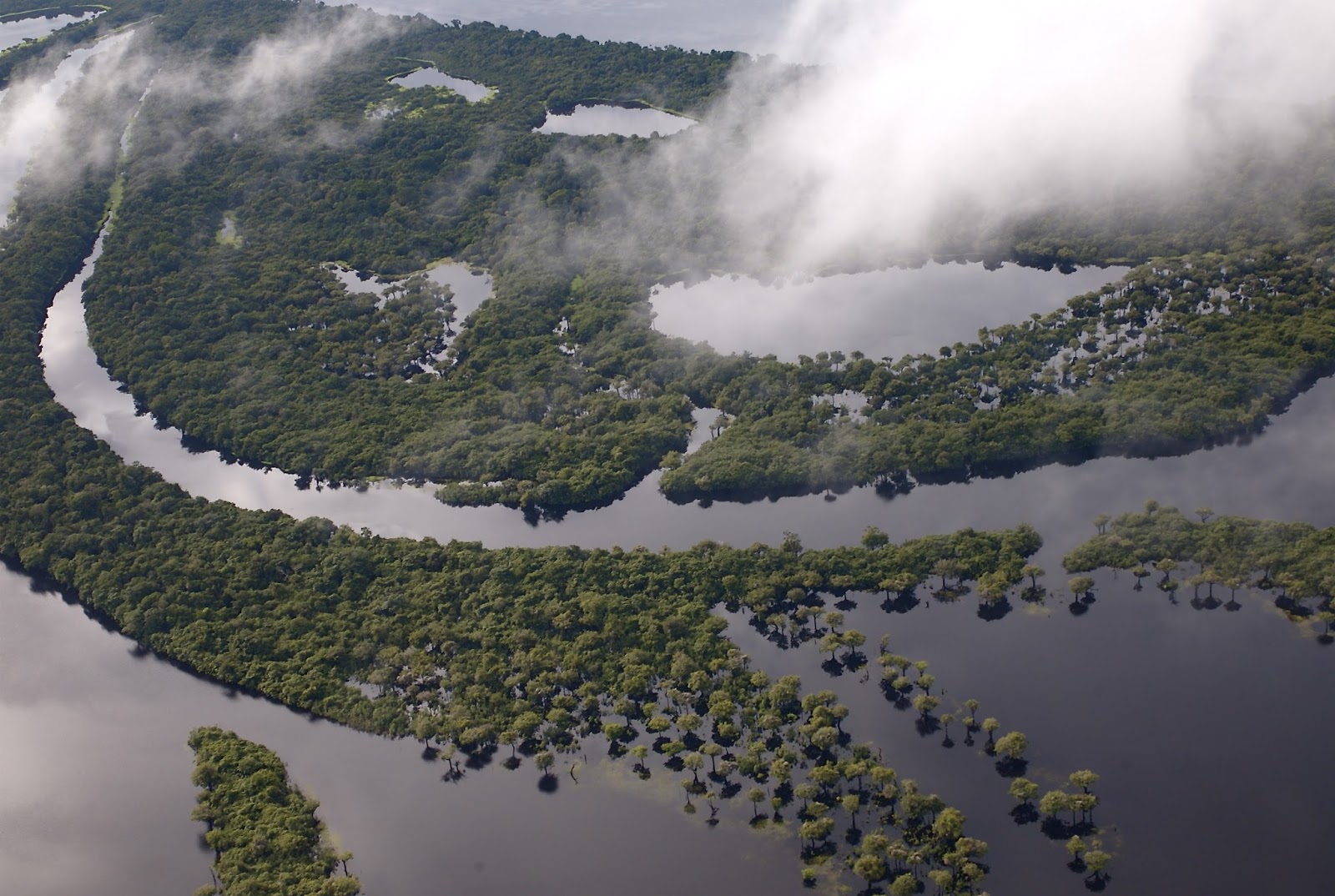
The Amazon rain forest, a large portion of which is located in the South American country of Brazil, is one of the most biodiverse places on earth. It is the largest rainforest and features the Amazon River, the largest river by volume on the planet. There are several different animal species that can only be found in South America including the anaconda, piranha, vicuna, llama, tapir, and jaguar. The Galapagos Islands, which are located off the coast of Ecuador, are also home to many endangered species that are not found anywhere else on the planet. More than 97% of those islands are conserved as a national park and are protected from damage that could be done by humans or harmful tourism practices.
South America contributes to world heritage in many ways since it is home to a long list of remarkable aspects of nature. Angel Falls in Venezuela is the highest waterfall on Earth; much farther south in the continent you can also find Iguazu falls, an amazing waterfall cascade on the border of Brazil and Argentina, which has been named one of the New Seven World Natural Wonders. The Atacama Desert, also found in South America, is the driest place on Earth. Lake Titcaca, on the border of Bolivia and Peru, is the highest navigable lake in the world. This is just a short list of the many natural wonders that South America offers to the world’s heritage.
Labels:
amazon,
brazil,
galapagos,
iguazu,
rain forest,
south america,
water falls,
World Heritage
March 24, 2013
Middle East Religious and Linguistic Heritage
The Middle East is a term that is often interchanged with the Near East to describe the area of Western Asia that is generally centered on the Arabian Peninsula. This relatively small region is home to the world’s most noteworthy religions and several common languages.
The history of the Middle East, or Near East, can be traced far back into ancient times due to the fact that this area has always been a center of events that have an international impact. When it comes to religion, Islam, Judaism, and Christianity were all originated in this area by ancient peoples. Although they are the three most commonly mentioned religions from the Middle East, others exist including Zoroastrianism, Mandaeism, the Druze faith, and the Baha’i faith. There are many lands and architectural structures throughout this region that have been a source of contention between different religious groups for centuries due to their importance in different faiths and belief systems which constitute a considerable part of world heritage.
Another way in which the Middle East has contributed to world heritage is through language. Arabic is the most widely spoken languages in the area although there are many dialects of this tongue. Other languages that can be heard spoken by large ethnic groups include Persian, Berber, Turkish, Kurdish, and Urdu. Some European languages, such as English and French, are being taught in schools in the area and are even used as the principle spoken language in some parts of this culturally diverse region. The Middle East has a wealth of cultural, linguistic, and religious history to share with the world.
Labels:
architectural,
islamic,
middle east,
structure,
World Heritage
March 9, 2013
The Ancient History Behind European Culture
Europe is the second largest continent and home to some of the most influential countries and governments in world history. From ancient times to the days of colonization to modern times steeped in globalization, the power of European culture and its ancient roots cannot be ignored.
Europe is the home of the concepts of Western culture as they were originally crafted in Ancient Greece. The ideas of Western culture – its social norms, values, philosophy, art, religion, and legal ideals – are far reaching and have impacted even countries that are traditionally rooted in Eastern culture. In the modern, globalized world the impact of Europe’s history cannot be ignored. Even the languages that have spread around the world, such as English, Spanish, and French, have their roots in the ancient languages once spoken throughout Europe.
Even though the basic customs and practices that constitute Western culture have changed dramatically through the centuries, the basic ideals that were once set forth in the ancient European nations of Greece and Rome are still common today. Europe offers world heritage in the way of amazing literature such as Shakespeare that is still treasured around the world despite being centuries old. Christianity was solidified in ancient Europe and spread throughout the Western world. Architecture was also a significant art form in ancient Greece and Rome and has become such a central part of Western European culture that even today buildings are constructed in imitation of those ancient structures. Certainly, the world has felt and continues to feel the powerful weight of Europe’s cultural world heritage in a variety of notable ways.
March 6, 2013
The Complex History Of Central America
Central America has undergone and continues to experience political change throughout its history. Since ancient times, different national and ethnic groups have sought to maintain control over various parts of this southern, isthmus region of North America.
Several pre-Columbian peoples lived and ruled in the area that is now referred to as Central America. One of the most well-known and document is the Aztec empire. Although it was centered in the area around present-day Mexico City, at certain points in its history this ancient empire wielded power over land as far south as Guatemala. The Maya empire also encompassed some of Central America and has had long lasting effects on local culture. Belize, Guatemala, and other Central American countries are still home to many ethnically and culturally Maya populations who wear traditional Maya clothing and speak the languages used by the ancient people of that culture. In recent years a greater effort has been made by these indigenous people to promote their unique cultures and customs.
When Christopher Columbus began exploring the New World he eventually discovered Central America and brought more Europeans with him. The Spanish began their efforts to conquer the Maya lands starting in the 1520’s. The Spanish and British empires struggled for land throughout the Central American region. Although the area is generally peaceful now, there are still long lasting political transformations going on in several Central American countries. Certainly these nations that have offered so much world heritage and cultural history deserve to find peace as well. The countries comprising Central America are Panama, Honduras, Nicaragua, El Salvador, Costa Rica, Belize, and Guatemala.
March 3, 2013
The Caribbean Mix Of Island Cultures
The Caribbean Sea, bordered by the Gulf of Mexico and the Atlantic Ocean, is home to thousands of islands that make up the sub-region of North America known as the Caribbean. Other names for this region include the West Indies, or the Greater and Lesser Antilles.
Due to the fact that many island nations make up the region known as the Caribbean, there are all sorts of different cultural influences melded together in this relatively small area. There are more than 10 different distinct cultural groups that once inhabited the islands in the Caribbean; the natives of these islands today are descendants of those natives, African slaves, and European colonists. As a result, many different languages are spoken throughout these countries. The predominant languages of the region are English, French, Dutch, Spanish, Papiamento, and Haitian Creole. However, there are small groups who speak other Creole languages and dialects that were developed from native languages, African tongues, and European languages.
One of the ways in which the Caribbean contributes to world heritage is through its amazing biodiversity. On land, researchers have found a wide range of animal and plant life in everything from mountainous cloud forests to desert like cactus scrublands. A considerable portion of the world’s coral reef life can be found in the Caribbean as well. Although much damage has been done to natural ecosystems throughout the Caribbean because of human activity, eco-tourism is becoming more popular in the region and is contributing to the protection of these beautiful islands. It is hoped that these efforts will allow future generations of people from all over the world to enjoy the biodiversity of the Caribbean nations.
Labels:
Antilles,
biodiversity,
Caribbean,
eco-tourism,
West Indies,
World Heritage
February 21, 2013
Canada Blends Cultures And Values
Canada is the second largest country in the world as far as land mass is concerned and shares the longest land border with any other country, in this case the United States. Canada is known for being a peaceful, multicultural country with a strong economy.
There are dozens of different aboriginal tribes that call the land now referred to as Canada “home”. Due to that fact there are considerable amounts of cultural influence spreading throughout the country. In addition, Canada is officially a multilingual country with both English and French being classified as national languages. Quebec is the province where French is most commonly spoken, although it is also spoken in many other parts of the country. This multicultural and multilingual history has no doubt had a strong impact on the modern approach Canada has taken on being a multicultural nation that shows respect for the beliefs and customs of many different ethnic and religious groups. This has bolstered immigration into Canada and now the country has one of the highest per-capita immigration rates in the entire world.
Canada also has a strong economy that is bolstered by its possession of massive amounts of natural resources including fresh water, oil, and lumber. It is one of very few countries that is a net energy exporter, making it important on the national level. The fact that this nation has nearly always exemplified a peaceful approach to politics and foreign relations has helped it in free trade agreements with other countries throughout the Americas and Europe.
February 15, 2013
The Historical And Modern Influence Of Asia
The massive Asian continent is home to billions of people who differ in custom, religion, and language. The differences in these cultures have allowed for the development of many different types of peoples and countries including modern economic powers that are important on an international level.
Many of the world’s oldest and most influential cultures come from the coastal regions of Asia such as the Middle East, the Indian sub-continent, and Southeast Asia. For instance, students of World History and Anthropology are sure to learn much about Mesopotamian culture and religion since these continue to have an influence on modern cultures today even thousands of years after they have disappeared. Some of the most important achievements in Asian history have been those of the wheel, mathematics, cities, states, and empires. Asian religion is incredibly important on a worldwide scale since it is home to the grand majority of the world’s most influential religions including Christianity, Judaism, Islam, Hinduism, and Buddhism.
In modern times the Asian economy has become incredibly important at the international level because of how countries such as India, China, and Japan have affected worldwide commerce. Although Japan has enjoyed one of the most powerful international economies for many years, developing nations such as China and India are showing great potential for growth and could eventually overtake the success of Japan and other industrialized countries. Even small countries, such as Singapore, have shown the potential for economic growth; Singapore is the fourth largest center for foreign exchange and is home to one of the busiest ports. Without a doubt, both the past and the future of the entire international community are indebted to Asian history, Asian religion, and the Asian economy.
Labels:
Asia,
asian economy,
asian history,
asian language,
asian religion,
World Heritage
Subscribe to:
Posts (Atom)