Pages

October 15, 2013

Spice Up Your Cup Of Milk

As breath taking is the island of Sri Lanka is so it the food that these people eat. A 30 mile chain of shoals is the only feature that separates this country with India which is on the other side of the Indian Ocean.

The geographical location of Sri Lanka and its proximity to India has a direct influence on the food that is eaten here. Colombo had been previously inhabited by the British, Dutch and Portuguese who brought along cooking styles and food combinations from their own countries. The Sri Lankan exotic food types are therefore blends that the local people adapted to suit their taste and ready availability of ingredients. As a general rule food eaten in Sri Lanka is hot and spicy and highlights a blend of flavors from major parts of the world. It is true to therefore say that Sri Lanka enjoys a cuisine that is a blend of many others of the world’s best.

The features of the Sri Lankan food are both evident in the vegetarian and meat dishes. Even short easy to prepare appetizers and salads have an exotic feel of the exotic food and the rich history behind it. Sri Lanka is rich in food spices which are readily used to enhance the flavors of dishes which are eaten they're common. By simply appreciating the effect of spices on the food we eat, you will realize that Sri Lankan cuisine is a work of art. This is a cuisine so richly ground that they have spices to put in milk to enhance its taste for those people who do not take plain milk.

October 8, 2013

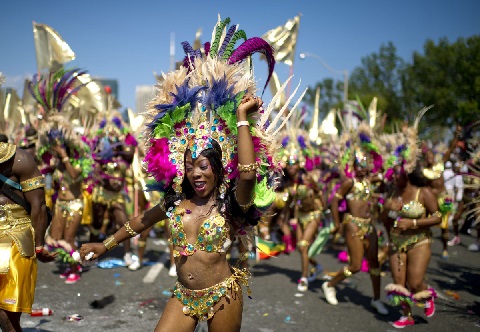
The Caribbean Culture

The Caribbean culture is influenced by the British. The conquest was in the 1759. The symbols of the Caribbean include the palm, shell and parrot. Their flag has undergone many changes as time passed by. The origin of their language is basically understood by human capacity, symbolic communication and the origin of complex cultures. Also, it emerges to maintain the coherence within their social group/s like children acquire such knowledge as language as the basic norms of the environment they are growing up in. Therefore, a language is basically an interaction between members of the same cultural society. In the arts field, the Caribbean people follow the trend of the Europeans where it flourished in the 1990s. In literature, it is always divided into English, French and Spanish languages where the perspective is often the nature, the life and their position in the world.

Speaking a language is one of the society’s culture as well as other shared norms or practices, generally. It has become the identity of the group. Its functions are always the same as any other countries’ languages. It is the way to communicate with the people of the same society or group. Here in the Caribbean, there is the so-called multiculturalism and bilingualism. The people here know two or more languages to be able to communicate with outsiders. They also have the so-called cultural protectionism which is to promote Caribbean cultural production and not the foreign ones. This is created by reform conscious constituents as well as interventionists. However, sharing a majority of common language such as the American English is still a difficult position for the Caribbeans to be diffused of the American culture. And though this has to be faced, the Caribbean people still know how to balance any trade arrangement responsibility.

October 2, 2013

The Religious History Of India

India is the second most populated country in the world and has been an important part of the international economy for centuries. It is the birthplace of several important world religions including Hinduism, Buddhism, and Jainism which makes it a major part of world heritage.


The origins of Hindu philosophy and mythology were established from 1700 to 500 BC in what is called the Vedic period. There are still many practices and beliefs that are treasured today which came from this time period including karma, yoga, Dharma, and moksa. Hinduism has gone through many notable changes throughout the years but has been the major religion in India for centuries. Hindu temples also contribute to world heritage because their stunning architecture, design, and preservation of religious history helps researchers better understand the customs of ancient peoples who worshipped in them. It is estimated that more than 80% of the population belongs to the Hindu faith, making it the home of the largest Hindu population on Earth.

Although less than 1% of Indians claim to be Buddhist, this religion originated in India and still has major impacts on local culture. Buddhist teachings spread from the area of Bihar, India throughout Asia from ancient times. In the 13th century, it declined drastically as a religion in India but many of its core concepts had a permanent influence on the Hindu religion. It is still practiced in the Himalayan religions of India and has recently been adopted by many of the intellectual elite of the country. The birth of two world religions, apart from many other contributions, makes India an important part of world heritage.

September 17, 2013

Ancient History and Modern China

China, or the People’s Republic of China, is the second largest country in terms of land on Earth and is the second largest economy. The country has a rich political and social history of dynasties and empires that, although long past, continue to influence the modern culture of China.


Although some evidence has been found of pre-historic people in China, the first historical rule of a dynasty in the area is that of the Xia Dynasty. This dynasty was once contested by historians as being mythical, but some evidence has been found giving its authenticity. Many wars were fought between rival states during the years of the feudal dynasties and eventually a unified Chinese empire was born in 221 BC. One of the most culturally important eras of Chinese rule was that of the Han Dynasty; its culture has endured into modern times. The era of the Han Dynasty saw China as the world’s largest economy thanks to military expansion and trade of materials such as silk.

The teachings of Confucius, a Chinese philosopher who lived from 551 to 479 BC, are still important to Chinese culture. His theories of ethics, society, and politics were solidified during the Han Dynasty. The basic elements of Confucianism are that secular things are regarded as sacred; it can be compared to modern humanism. It focuses on the importance of altruism, family, acts of goodness, and proper behavior in a community. Although the theories of Confucianism changed slightly with ingoing and outgoing Chinese empires, the core concepts have always remained and are still cherished by some of China’s great thinkers. Certainly, these teachings should be viewed as an important world heritage.

September 9, 2013

Mouthwatering Exotic Curries Explored

If you are looking for a reason to visit Bangkok then you only need to think about the food which offers a blend of taste. If you are used to eating sweet food separately from bitter food exotic Thai cuisine offers a blend of tastes in a single dish.


The defining characteristic of Thai food is in the use of herbs and spices to give food a distinct flavor. The Thai people are keen on strong flavors and such items like fresh coriander, lemon grass and lime juice are used to enhance the taste of food. It goes without saying that rice in this country continues to remain a staple food. The rice is often accompanied by food pastas and curries all of which are prepared to give added flavor to the food.

The Thai people have a rich culture is dynamic and it comes out clearly in the food that they eat. Try and eat a portion of raw beef, deep fried insect larvae or fermented fish paste to realize how rich this cuisine is. This is a culture that has not been using very friendly ingredients and people often finds it interesting. It is good to understand that the styles of cooking the Thai dishes are similar to that of the many Asian continent country but the demarcation lies in the fact that the cuisine is simply interesting. Many hotels in the world offer Thai cuisine and so it is important to experience the cuisine at home before you branch out. You will find these foods irresistible and exciting in the mouth.

September 3, 2013

Québec Culture and People

In the globalization era the borders are permeable, but the art and culture still represent a reference point for the people. Through cultural heritage people are expressing their sense of belonging to a society.

This fact is even more highlighted in Québec. French-speaking people are struggling to keep their cultural distinctiveness surrounded by a vast English-speaking neighbored communities of English Canada and United States. As a land of immigration added over its aboriginal history, by its both French and British influences, the Québec culture still benefits, more than any other culture on the continent, from the strong ties with the two great civilizations that influenced it: Europe and America. Being the only majority French-speaking society in North America, Québec maintains a deep connection to its own cultural heritage, the most important symbol of its identity. Québec’s culture is marked by its struggle to resist assimilation. The French language is the most important aspects of Québec’s cultural heritage and the principal factor in keeping it alive. To help preserve and promote the French language, the Québec government has even created an Office of the French language.

Through history, since the first settlement of French colonies, Québec culture was strongly influenced by Catholicism. The religion was present in all spheres of Québec society, in public administration, education and health. The emergence of the secularization movement in the 60s dramatically changed the social realities in the Province of Québec. The Cultural Revolution started in the 70s modernized all spheres of life and in the present days the cultural realities are keeping the pace with the rest of Canada and the Southern neighbor, the United States. From the cultural heritage of the past are left various places of pilgrimage, churches, religious statues and museums.